We showed the PKE flavors side by side: PKE Prime for production on dedicated nodes, PKE Flex for CI and preview clusters, PKE Edge for remote sites and PKE Metal for your own servers. One managed Kubernetes for every stage of an application's lifecycle.
The pitch to startups was simple: modernise the infrastructure without hiring a platform team, boost developer productivity, and get to market faster with the stability and security production demands. Infrastructure handled means the team spends its time on the business, not the platform, and that is where a startup becomes competitive.
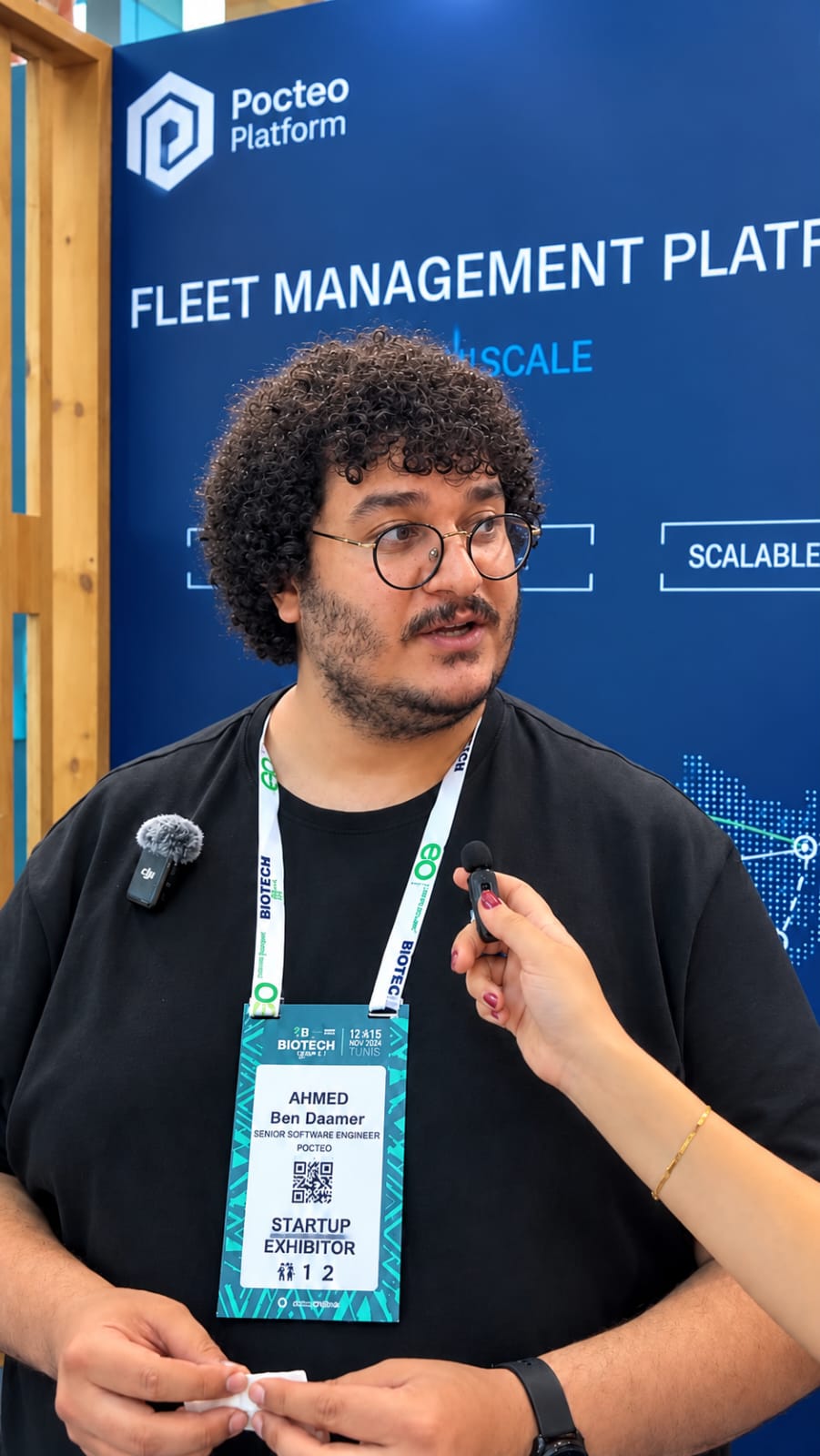
Ahmed Ben Daamer, Senior Software Engineer and Pocteo Ambassador, represented us on the booth and in the interviews.
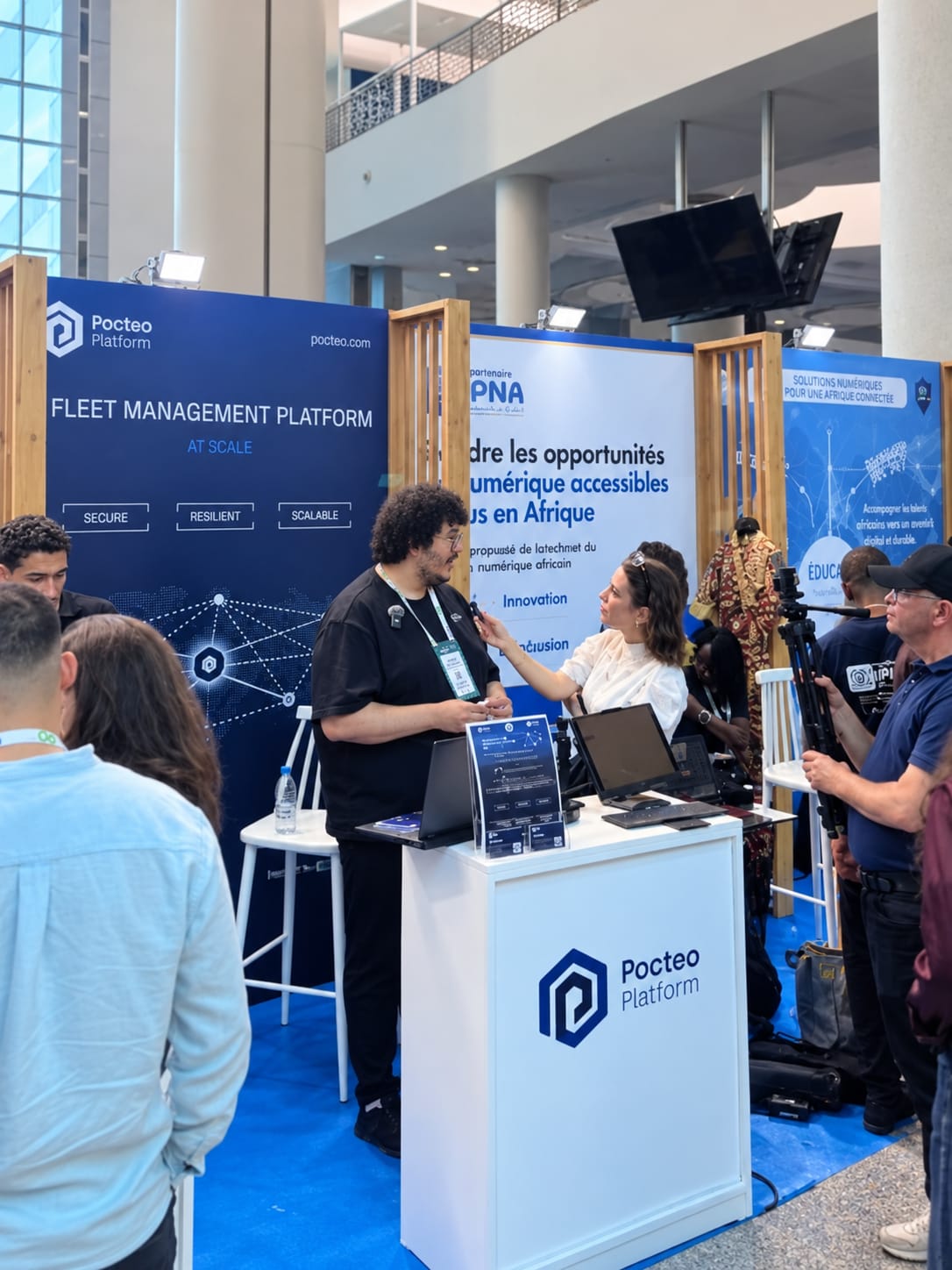
The technical conversations were the best part. LLMs, deterministic workflows for proactive monitoring in SRE operations, and cybersecurity threat detection came up at almost every stop.
We also met the actors our products depend on: datacenters, virtualization and cloud stack providers. Great discussions with their CTOs, and real potential for collaboration. We shared our roadmap with enthusiasm and left with a list of follow-ups.
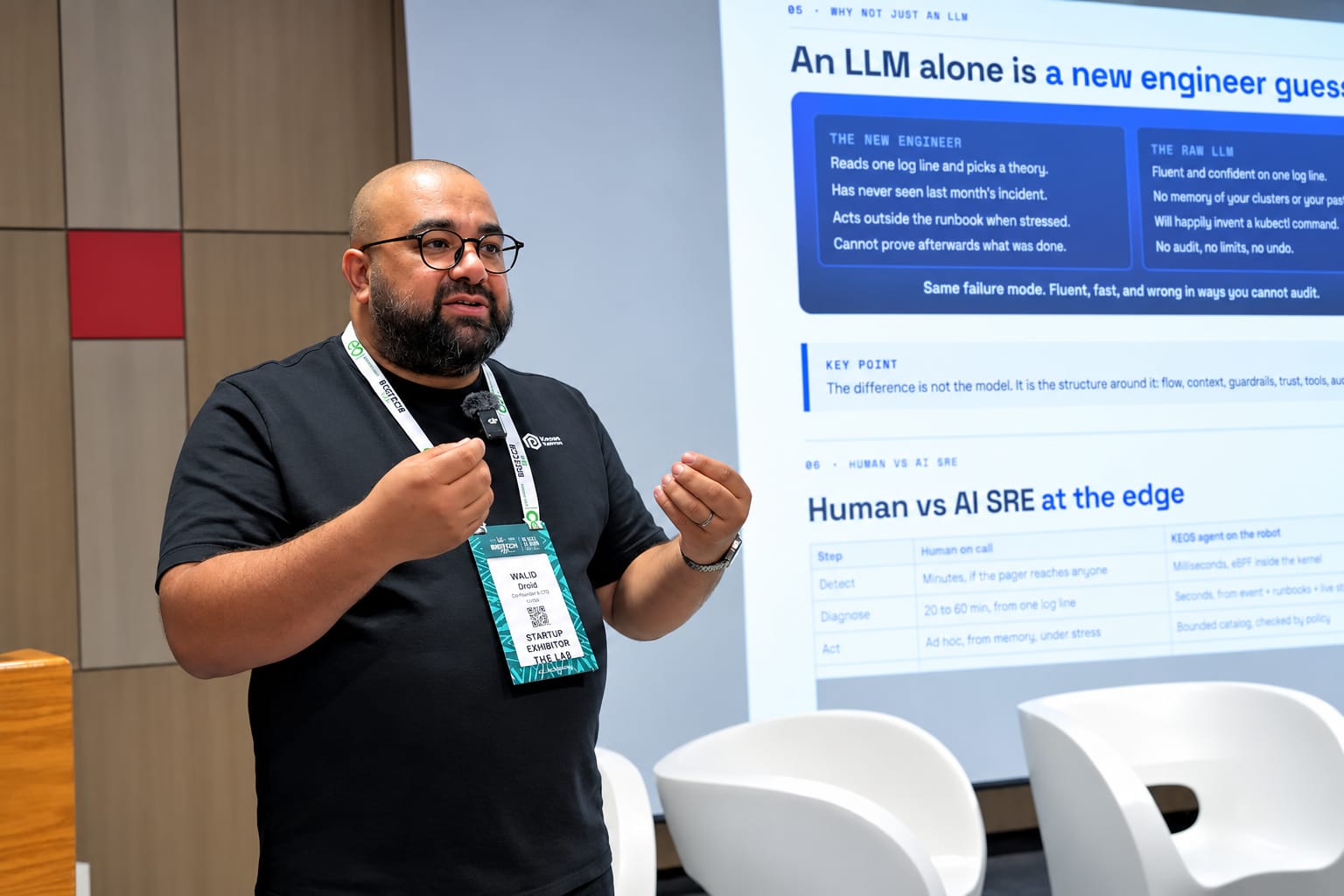
As a speaker, Walid Dridi presented Zero Humans in the Loop, an overview of how we use AI inference to secure uptime: proactive monitoring and self-remediation triggered by symptoms, before the incident occurs.
One slide said it best: why not just an LLM? Because the difference is not the model, it is the structure around it: flow, context, guardrails, trust, tools and audit.
If the viewer does not load on your device, open the slides as a PDF.
Thank you to everyone who stopped by the booth, sat in on the talk or challenged us on the hard questions. See you at the 2027 edition. We intend to make it even more impactful.
The conversation continues.
Tell us where your application is in its lifecycle. An architect will show you which PKE flavor fits, and what the first week looks like.